Here’s my take: the Northwest Corridor is one of those rare retail pockets where the math and the vibe line up. That doesn’t happen as often as brokers like to pretend.
You’re looking at a part of Wichita that behaves like a “real” growth corridor: steady rooftops, consistent car counts, plenty of daily-errand traffic, and enough newer retail stock that a national tenant can open without sinking the budget into weird retrofits. Still, there are tradeoffs. There always are.
One line that matters more than it sounds:
A store can be “in Wichita” and still not be in the same retail game.
The corridor is convenient. That’s not a small thing.
If you’ve ever run site selection, you already know convenience isn’t fluffy branding talk. It’s operational truth. Highway proximity, quick turns, predictable ingress/egress, signal timing, and parking design all show up later as conversion rate and labor efficiency (because fewer customer issues means fewer staff interventions).
Wichita’s Northwest Corridor benefits from the kind of road network that supports repeatable trips: groceries, quick-service food, kids’ stuff, fitness, home improvement. Not “destination retail only.” More like: “I’m already passing NewMarket Square, I’ll stop.”
And yes, foot traffic matters, but in corridors like this, vehicle traffic + easy access often acts like foot traffic. It’s a different mechanic, same outcome.
What national brands actually screen for (beyond the brochure)
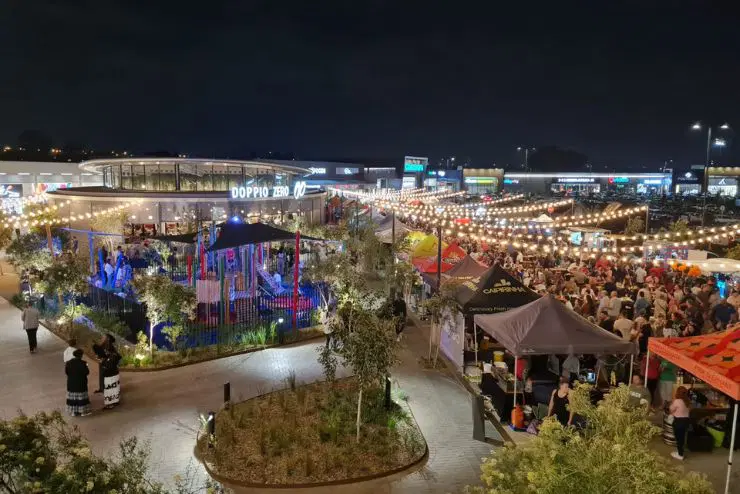
When brands say “we like the market,” they usually mean the market cleared a few internal filters. The Corridor tends to do well on the ones that kill deals quietly:
– Trade area strength: density + household formation + stable daytime demand
– Visibility: not just frontage, but sightlines and turning patterns
– Occupancy economics: rent vs. expected sales per square foot (and tenant improvement load)
– Speed to open: permitting friction, utility readiness, contractor availability
– Co-tenancy: anchors and adjacencies that reliably generate cross-shopping
Now, this won’t apply to everyone, but… if your concept depends on heavy walkability, you’ll evaluate very differently than an off-price tenant that thrives on parking convenience and fast “in and out” trips.
Do incentives matter? Absolutely. But they don’t fix a weak site.
Look, incentives are helpful. They reduce early-year risk, improve break-even timing, and can make prototype economics pencil out without cutting corners on build quality. Wichita and Sedgwick County tools often come up in conversations around redevelopment, job creation, and capital investment, depending on location and program fit.
But incentives are dessert, not dinner.
If the site is awkward, if access is messy, if the trade area is thin, the prettiest abatement package won’t rescue long-term productivity. I’ve seen teams get seduced by a grant and then spend five years explaining underperformance.
A practical aside: incentives can also affect timing. Approval cycles, compliance reporting, and construction milestones can add friction if your rollout calendar is tight.
Labor and operating costs: the unsexy advantage
A lot of national brands are quietly optimizing for controllable expenses right now. Wichita typically offers a cost structure that’s easier to manage than bigger metros, and that matters because retail is still a game of margins and execution.
Lower labor pressure can show up as:
Shorter hiring cycles, less wage escalation, more stable scheduling.
That stability feeds customer experience. It also reduces training churn, which, if you’re running volume, turns into real money.
Energy and utilities? Usually not a shock factor. That’s good. Predictability is underrated when you’re rolling out multiple stores.
Demographics: the slow engine that keeps pulling
People love to talk about “up-and-coming shoppers,” but what brands really want is repeatable demand without drama. The Northwest Corridor’s draw is that it tends to align with the segments that keep retail boring (boring is profitable): households, families, steady earners, routine purchases, predictable peak hours.
You’ll also see a mix that supports both value and aspiration:
A corridor can carry off-price and premium-adjacent concepts at the same time, as long as the positioning is clean and the site fits the mission.
One caution, though. Rising income doesn’t automatically mean your SKU strategy works. If you bring a coastal assortment and don’t localize, the store will feel “off” even if the demographics look perfect on paper.
A quick stat, because hand-waving doesn’t help
Wichita’s population is roughly ~400,000 (city proper), with the metro closer to ~650,000. Source: U.S. Census Bureau (QuickFacts: Wichita city, Kansas).
That scale matters. It’s big enough to support multiple national concepts, but small enough that trade areas overlap and brand reputations travel fast. You can win quickly; you can also get labeled quickly.
Experiential retail works here (if you don’t overbuild it)
Question: Do you really need “experience” in a corridor that already delivers convenience?
Sometimes yes. Often no.
Here’s the thing: experiential features work best when they’re lightweight and operationally sane. Think demos, seasonal events, pop-up collaborations, interactive displays that don’t require a full-time staff babysitter. When it’s done right, you get longer dwell time and better attachment rates without turning your store into a theater production.
In my experience, the Corridor rewards retailers who treat experience as a conversion tool, not a brand manifesto.
One-line truth:
Instagram moments don’t pay rent unless the basket follows.
The operations side: parking, logistics, and build-out realities
This is where the Northwest Corridor quietly shines. National tenants like repeatability: standardized layouts, predictable bay depths, easy deliveries, and parking that doesn’t create customer conflict.
A few operational levers brands tend to like here:
– Delivery practicality: straightforward truck access reduces receiving headaches
– Parking capacity: supports volume without “circling fatigue”
– Build-out control: newer retail product can reduce demolition and MEP surprises (sometimes)
– Modular fixture strategies: faster installation, fewer custom costs, easier refresh cycles
Still, don’t assume every box is plug-and-play. Tenant improvements can jump fast if you’re adapting a prototype to odd utilities, legacy HVAC, or a landlord scope that’s… optimistic.
Competitive dynamics: a corridor can be strong and crowded
The Northwest Corridor isn’t some untouched frontier. Competition exists, and in certain categories it stacks up quickly: value retail, specialty off-price, convenience-driven food, fitness, home categories. That can be good. Clusters create destination gravity.
But saturation is real. A new entrant has to know what it’s stealing share with:
Price? Speed? Assortment? Service? Omnichannel convenience?
If your answer is “a little of everything,” you’ll be average. Average stores die slowly.
What the successful brands tend to do differently
Not a neat “case study” format here, just patterns I’ve watched work:
They open with tight localization.
They measure early and adjust fast.
They don’t overcommit to a fantasy comp.
A smart operator uses the first 90 days like a live test: tweak staffing by hour, recalibrate replenishment, shift endcaps based on real basket data, and align promos to local rhythms (school calendars, pay cycles, weather swings). That’s not sexy. It’s effective.
The nuance nobody wants to hear: timing can make or break the deal
Permitting, construction schedules, and contractor availability can stretch timelines. If you’re trying to hit a seasonal opening window, you build schedule buffer into your plan and you negotiate landlord deliverables like a lawyer (because that’s what it becomes).
A corridor can be perfect and still punish you if you open late, understaffed, or half-fixtured.
That’s the reality.
Final thought (not a bow-wrapped ending)
National brands choose Wichita’s Northwest Corridor because it offers a rare blend: demand that’s legible, access that’s easy, and economics that don’t require heroics. The winners aren’t the ones who “enter Wichita.” They’re the ones who respect how this specific corridor behaves, and build their store to match it.